
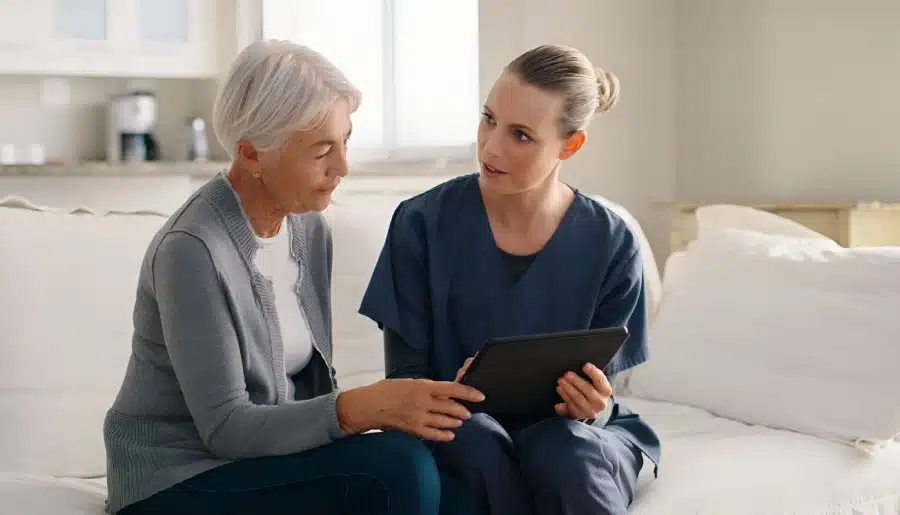
Earning a CNA certificate is often the first step into the healthcare field for many caregivers. It provides practical training and certification that allows individuals to work directly with patients in a variety of care settings.
In Colorado, CNA certification carries added value. It connects directly to both formal employment and in home services, making it relevant for those working in healthcare facilities as well as those supporting individuals at home.
Within structured programs such as IHSS service models, CNAs contribute to daily care routines and help individuals maintain independence through consistent assistance.
What Can A CNA Do In Healthcare Settings?
If you are asking “What can a CNA do,” the role is focused on providing essential, hands-on patient care under the supervision of nurses and healthcare professionals.
CNAs are trained to assist individuals who need help with daily activities due to age, illness, disability, or recovery needs.
Core responsibilities of a CNA:
- Assisting patients with bathing, grooming, and hygiene
- Helping with dressing and personal care routines
- Supporting mobility and safe transfers (bed, wheelchair, etc.)
- Monitoring and recording vital signs
- Assisting with feeding and hydration
- Observing patient condition and reporting changes
- Providing emotional support and companionship
These responsibilities ensure patients receive consistent care and comfort throughout the day.
Where Can You Work With A CNA Certificate?
A CNA certificate allows individuals to work in a wide range of healthcare environments, depending on their interests and experience level.
Hospitals
CNAs in hospitals support nursing staff by:
- Assisting with patient mobility
- Monitoring vital signs
- Helping maintain patient comfort during recovery
Long-Term Care Facilities
In nursing homes or rehabilitation centers, CNAs:
- Provide ongoing daily care for residents
- Support elderly individuals with chronic conditions
- Assist with routine activities throughout the day
IHSS Service Roles
In structured care programs like IHSS service, CNAs or trained caregivers may:
- Provide non-medical personal care assistance
- Support individuals with disabilities or chronic conditions
- Help clients maintain independence at home
CNA Roles in Family and Community Care
In addition to professional healthcare settings, CNA certification can also support family caregiving situations. Many individuals use CNA training to better care for aging parents or loved ones at home.
While certification is not always required for family caregiving, it can improve:
- Safety during physical care tasks
- Understanding of patient needs
- Communication with healthcare providers
- Confidence in managing daily care routines
This is especially relevant in structured programs such as a certified nursing assistant (CNA) program, where training includes both technical skills and patient care fundamentals.
Skills You Gain as a CNA
A CNA certificate provides more than job eligibility it builds practical skills that apply across healthcare and home care environments.
Key Skills Include:
- Patient safety and infection control
- Vital signs monitoring and reporting
- Safe lifting and transfer techniques
- Basic emergency response awareness
- Understanding patient privacy (HIPAA compliance)
- Care for individuals with cognitive or physical impairments
These skills are essential for both professional roles and family caregiving support.
CNA Career Growth Opportunities
A CNA certificate creates a strong starting point for long-term advancement in healthcare. Many individuals build on this foundation by moving into higher-level clinical roles such as Licensed Practical Nurses (LPNs) or continuing their education to become Registered Nurses (RNs).
Others choose to focus on specialized areas, including home health or geriatric care, where they can develop deeper expertise in working with specific patient populations.
Some CNAs transition into administrative or training positions within healthcare facilities, using their hands-on experience to guide teams or support operations. In Colorado, this experience often acts as a gateway into more advanced caregiving programs and expanded educational pathways within the healthcare system.
CNA Certificate in Colorado Caregiving Programs
Within Colorado, CNA certification connects directly to structured caregiving systems that serve both individuals and communities.
Certified caregivers often engage with home care agencies, participate in family caregiving support programs, and work within IHSS-style service environments that focus on non-medical assistance. Community-based care initiatives also rely on trained CNAs to help meet local care needs.
A certified nursing assistant (CNA) program equips individuals with the practical knowledge required to function effectively across these settings. This makes it easier to contribute in both professional roles and personal caregiving situations.
CNA Work in In-Home Services
In-home services continue to expand as more individuals choose to receive care in a familiar environment rather than relocating to a facility. CNAs in this setting focus on delivering consistent, one-on-one assistance that fits naturally into a client’s daily routine.
Their work often includes helping with morning and evening care, assisting with safe movement to reduce fall risks, and supporting proper nutrition and hydration throughout the day.
They also play an important role in offering companionship and emotional connection, which can significantly impact overall well-being.
In addition, CNAs observe and communicate any changes in a client’s condition to supervising nurses. This type of care fosters stronger relationships and allows for a more personalized approach to supporting each individual.
Why CNA Certification Matters
CNA certification provides structure, credibility, and training that improves care quality across all settings. It ensures caregivers understand safety standards and patient needs while maintaining consistency in care delivery.
For families and individuals in Colorado, it also provides access to more structured care opportunities and better integration with professional healthcare systems.
Final Thoughts
A CNA certificate opens the door to a wide range of caregiving opportunities across hospitals, home care, and community-based services. If you are exploring “What can a CNA do,” the answer goes beyond basic tasks. It includes meaningful patient support, essential healthcare assistance, and the ability to make a direct impact on people’s daily lives.
Whether used for career growth or family caregiving support, CNA training remains one of the most practical entry points into the healthcare field, especially within Colorado’s growing in-home care and IHSS service environments.
Reach out to Voyager Home Health Care today to learn how to get started and begin building your future in caregiving.
